

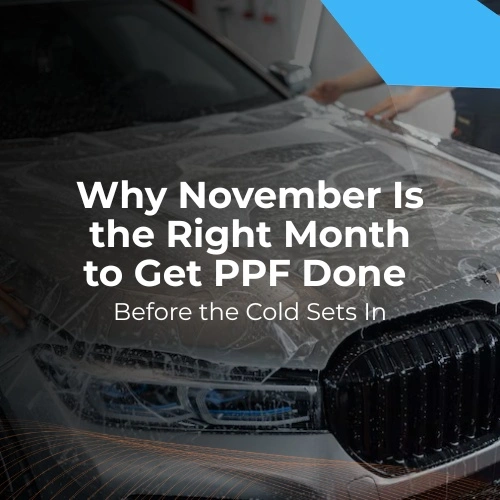
Most people think about PPF only after the first scratch on the car. But when you get it done matters almost as much as getting it done.
PPF is a clear TPU film held on by an adhesive, and that adhesive needs time to bond. Weather plays a big part in this, which is why PPF installation weather temperature matters. Installers generally work best at moderate room temperatures, roughly 18 to 25°C, with controlled humidity.
Winter usually sets in from mid-November, and that makes it the ideal time to get PPF in Pune.
Aquatint Auto Detailing Studio in Baner, Pune, offers PPF, ceramic coating and denting and painting under one roof, and checks your paint before any film goes on.
Why November Weather Suits PPF Installation
- Humidity eases from monsoon highs and skies clear up.
- PPF moisture evaporation and temperature go hand in hand. The water-based solution used during installation needs to escape from under the film, and drier, warmer air helps it do that.
- Haze and tiny bubbles settle sooner as a result.
- When you compare PPF curing time in winter vs post-monsoon months, November’s mild, dry conditions let the adhesive set at a steady pace.
PPF Cost in Pune: What to Expect
As a general guide:
- Front or partial package: roughly ₹25,000 to ₹65,000.
- Full body for hatchbacks and sedans: roughly ₹70,000 to ₹1,40,000.
- Full body TPU PPF price for SUVs: roughly ₹1,00,000 to ₹2,20,000, with luxury cars costing more.
Film grade, warranty, vehicle size, and paint condition move these numbers. Self healing PPF costs more than standard film, but light swirl marks fade with sunlight or warm water, and Pune’s clear winter days help that process.
How to Prepare Your Car Before PPF
- Get a paint inspection to find chips, water spots and early rust.
- Repair dents and chipped panels first, so the film sits on a smooth surface.
- Book your slot ahead of time, so the installation is not rushed.
PPF vs Ceramic Coating: Which Is Better Before Winter?
PPF stops physical damage like chips and scratches, while ceramic coating adds gloss and repels water, dust, and UV.
So, PPF vs ceramic coating, which is better? It depends on the damage you want to prevent, but for most owners the strongest answer is both: film first, then a ceramic top coat once the film has cured. To see how long a coating lasts on Indian roads and how to make it last longer, read our guide on how long ceramic coating lasts in Indian conditions.
Winter Car Care in Pune: Aftercare After PPF
Avoid washing for about a week so the adhesive cures. Expect slight haze or tiny bubbles for a few weeks. They usually disappear on their own. Hand wash with pH-neutral shampoo and soft microfiber cloths. Never point a pressure washer at film edges, and skip automated brush washes. Wipe off bird droppings and dew-borne dust early, especially on foggy mornings.
Planning PPF this month? Book a paint inspection at Aquatint Auto Detailing Studio in Baner.
Conclusion
November gives you dry air, moderate temperatures, a clean slate after the monsoon, and time to protect your car before the year-end travel rush. Looking for the best car detailing in Pune for PPF? Aquatint Auto Detailing Studio inspects your paint, repairs any damage, and applies the right film and coating for your car.
Frequently Asked Questions
Q1. What is the best time to get PPF in Pune?
November is a good choice. Humidity drops after the monsoon, days stay warm, and installation happens indoors. It also lets film cure before the coldest nights of December and January.
Q2. Does cold weather affect paint protection film installation?
Yes. Cold makes film stiffer, weakens adhesion, and slows curing. That is why PPF should be installed indoors in a controlled space. Pune’s winters are mild, so this is manageable.
Q3. What temperature is best for PPF installation?
Roughly 18 to 25°C with controlled humidity is generally ideal for installation and curing.
Q4. How long does PPF take to cure, and is it slower in winter than autumn?
Wait about seven days before washing. Minor haze or bubbles can take two to four weeks to clear, and cooler or humid weather, as in peak winter, can extend this compared with autumn conditions.
Q5. How much does PPF cost in Pune?
Front packages usually run ₹25,000 to ₹65,000, and full body ranges from ₹70,000 to ₹2,20,000 depending on car size, film grade, and warranty.
Q6. Is PPF necessary for a new car?
Not compulsory, but applying it early preserves the factory paint before stone chips and scratches begin.
Q7. What are the benefits of PPF in winter?
It protects against grit and chips on winter road trips, makes dew and dust easier to clean, and lets self-healing film recover from light swirl marks on sunny days.
Q8. Can I get PPF and ceramic coating together?
Yes. PPF goes on first, then ceramic coating is applied over the cured film and the rest of the paint, as your installer schedules it.
Q9. Does PPF increase resale value?
It helps preserve original paint, which buyers value, though it does not add a fixed amount.
Q10. How long does PPF last?
Good-quality PPF typically lasts 5 to 10 years, depending on film grade, climate, and maintenance.
Q11. Can PPF be applied to an older car?
Yes, if the paint is healthy. Dents, deep scratches, and rust need repair first, because film cannot hide them.
Q12. Where can I get the best PPF in Pune?
Aquatint Detailing Studio in Baner offers PPF, ceramic coating, and denting and painting under one roof for car owners across Pune.
Comments are closed